Checked November 12, 2026 against DeepSeek's API docs, privacy policy and terms, and chatgpt.com/pricing and help.openai.com (US prices). This is a documentation-based comparison, not a hands-on test.
Quick verdict
Price: DeepSeek's paid product is its API, and it is cheap per token. ChatGPT sells monthly plans: Free, Go ($8), Plus ($20) and Pro (from $100).
Privacy: DeepSeek's policy says it stores personal data in the People's Republic of China. Its terms fall under mainland Chinese law.
Training: both use consumer chats to improve models by default. ChatGPT has an in-app switch to opt out; DeepSeek's policy points you to an email address.
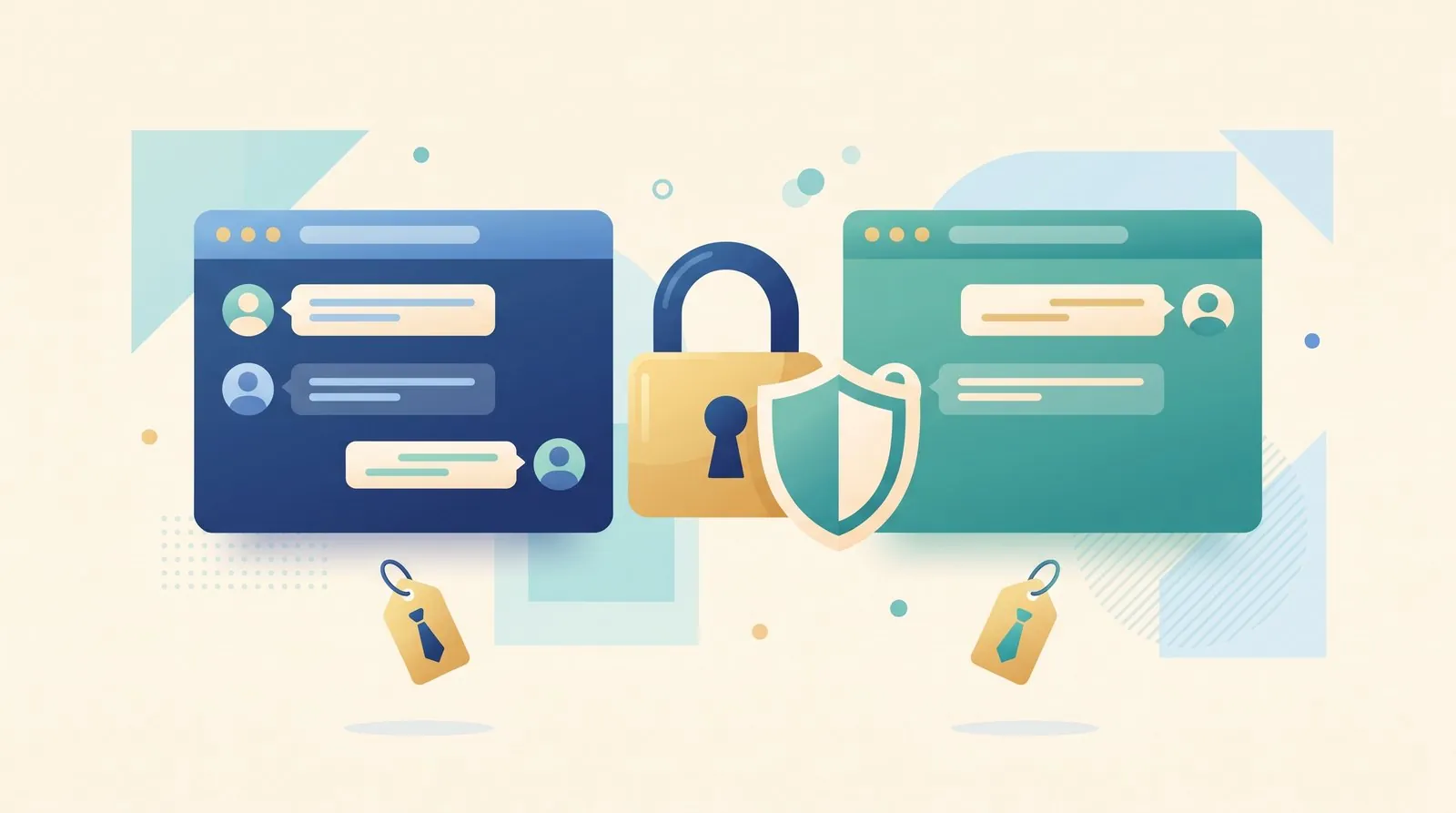
Illustration: AI Tool Audit, created with Google Gemini
On this page
Two different ways to pay
ChatGPT and DeepSeek both offer a web chat and phone apps. Their business models differ, though.
OpenAI sells ChatGPT as monthly plans with more usage and features at each step. Our ChatGPT plans explainer covers each one in detail.
DeepSeek publishes no consumer subscription on the official pages we checked. Its homepage links to the web chat and app, and its pricing page covers only the API, where developers pay per token.
Prices side by side
| Option | Listed US price | Who it's for |
|---|---|---|
| ChatGPT Free | $0 | Casual use |
| ChatGPT Go | $8/month | Light everyday use |
| ChatGPT Plus | $20/month | Regular personal use |
| ChatGPT Pro | From $100/month | Heavy users |
| DeepSeek web chat and app | No price listed on official pages | Consumers |
| DeepSeek API | Per 1M tokens (see below) | Developers |
DeepSeek API pricing
DeepSeek's docs list two models, both with a 1M-token context window. Prices are in US dollars per 1 million tokens. Off-peak rates are half the peak rates.
| Model | Input, cache hit (off-peak / peak) | Input, cache miss (off-peak / peak) | Output (off-peak / peak) |
|---|---|---|---|
| deepseek-flash (V4.1-Flash) | $0.003 / $0.006 | $0.15 / $0.30 | $0.60 / $1.20 |
| deepseek-v4-pro | $0.022 / $0.044 | $0.66 / $1.32 | $1.98 / $3.96 |
Peak hours are 01:00 to 04:00 and 06:00 to 10:00 UTC, Monday to Friday, excluding Chinese public holidays. All other times, including weekends, are off-peak. For US users, that means most of the US working day falls in the cheaper window. Only the Flash model supports image input. To compare with OpenAI's developer rates, see our OpenAI API pricing guide.
Privacy: where your data goes
This is where the two differ most. DeepSeek's privacy policy, last updated February 10, 2026, says it collects, processes and stores personal data directly in the People's Republic of China. Its terms of use, last updated March 27, 2026, are governed by mainland Chinese law. Disputes go to a court near the company's registered office in Hangzhou.
The policy lists what DeepSeek collects. That includes account details, everything you type or upload, voice input, and chat history. It also collects device data such as IP address, device model and system language, plus approximate location based on IP.
OpenAI is a US company. Its consumer and business plans have separate data rules, covered below.
| Question | ChatGPT (personal plans) | DeepSeek |
|---|---|---|
| Chats used to train models? | Yes by default on Free, Go, Plus and Pro | Yes; the policy says inputs help train its models |
| How to opt out | Turn off "Improve the model for everyone" in Data controls | Policy lists a right to opt out; requests go to privacy@deepseek.com |
| Business option without training by default | Yes: Business, Enterprise and API | Not described in the policy |
| Data location stated | Not stated on the pages we checked | People's Republic of China |
| Retention | See OpenAI's help pages | As long as you have an account, and longer for legal reasons |
Training opt-outs in practice
On ChatGPT's personal plans, the pricing page marks content as used for training, with an opt-out. OpenAI's Data controls help page explains how: turn off "Improve the model for everyone" in settings. OpenAI says ChatGPT Business, Enterprise and the API are not used for training by default. Our AI training opt-out guide walks through the steps.
DeepSeek's policy says user inputs may be used to "train and improve our technology." It lists a right to opt out of that use but describes no in-app switch, so you would email its privacy team. You can manage or delete chat history in settings. Deleting your account is permanent.
Which should you choose?
- Choose ChatGPT if you want clear monthly plans, a simple training opt-out, or a work plan that does not train on your data by default.
- Choose the DeepSeek API if you are a developer and cost per token matters most, and you are comfortable with data stored in China.
- Avoid pasting sensitive data into any free chatbot. That includes client files, health details or passwords, whichever service you use.
- Check your employer's rules. Many companies limit which AI services staff may use.
Comparing more assistants? See ChatGPT vs Claude vs Gemini vs Grok and the AI tool price table.
FAQ
Is DeepSeek cheaper than ChatGPT?
For developers, DeepSeek's API rates are low, starting at $0.15 per million input tokens off-peak on Flash. For consumers, DeepSeek lists no subscription, while ChatGPT runs from free to $100 a month and up.
Where does DeepSeek store my data?
Its privacy policy says it collects, processes and stores personal data in the People's Republic of China.
Can I stop DeepSeek training on my chats?
The policy lists a right to opt out of training use. It does not describe a setting, so requests go to privacy@deepseek.com.
Does ChatGPT train on my chats?
On Free, Go, Plus and Pro, yes by default. You can turn off "Improve the model for everyone." Business, Enterprise and API data are not used for training by default.
Sources
- DeepSeek API: models and pricing (checked November 12, 2026)
- DeepSeek privacy policy (checked November 12, 2026)
- DeepSeek terms of use (checked November 12, 2026)
- DeepSeek homepage (checked November 12, 2026)
- ChatGPT pricing (checked November 12, 2026)
- OpenAI Data controls FAQ (checked November 12, 2026)