Checked November 12, 2026 against csa-iot.org and z-wavealliance.org. This is a documentation-based comparison, not a hands-on test.
Quick verdict
Starting fresh: buy Matter devices where you can. They work across Apple Home, Google Home, Alexa, SmartThings and Home Assistant.
Big house or many sensors: Z-Wave runs on a quieter sub-GHz band and certified products are tested for interoperability, but you need a Z-Wave hub.
Already own Zigbee gear: keep it. A hub or bridge can bring Zigbee devices into a Matter setup, so you don't need to replace working devices.
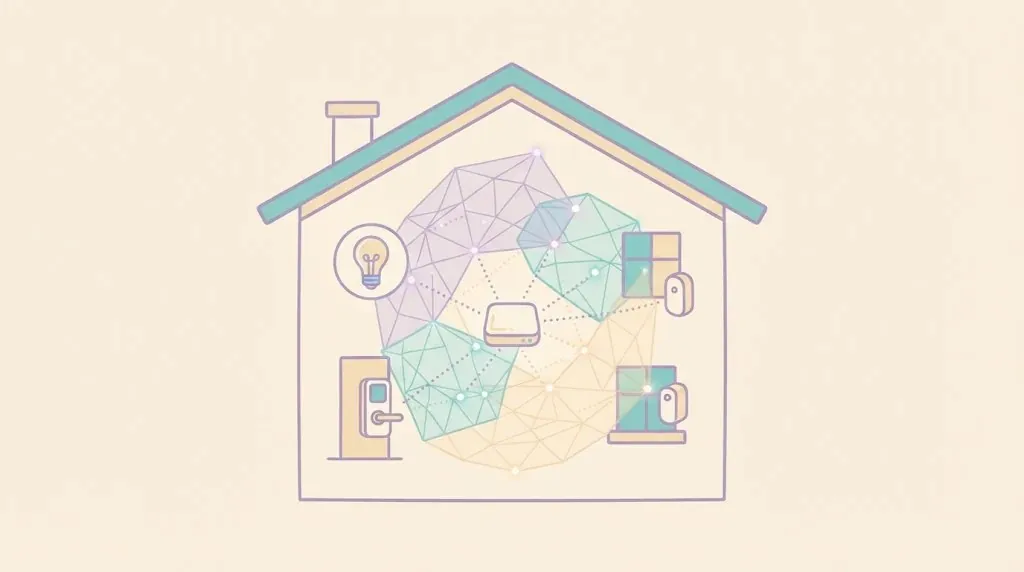
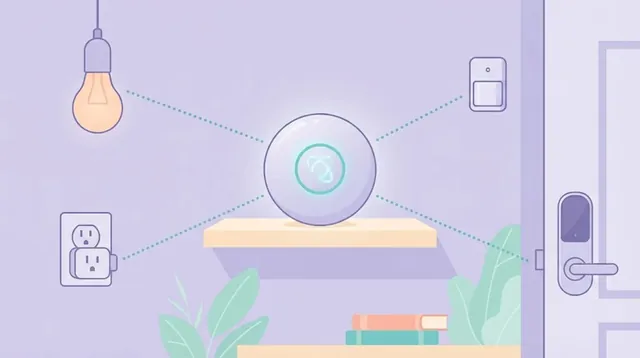
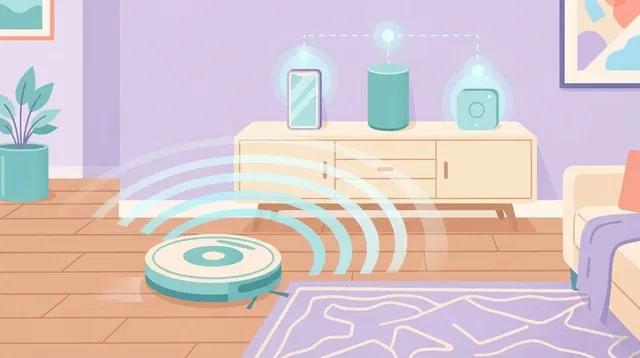
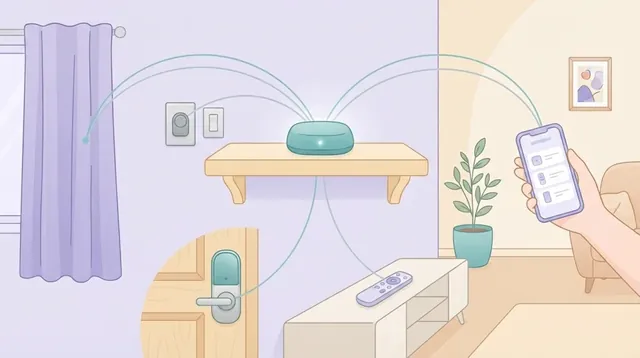
Illustration: AI Tool Audit, created with Google Gemini
On this page
Three standards, two different jobs
Zigbee and Z-Wave are wireless radio protocols. They describe how small, low-power devices such as sensors, plugs and locks talk to a hub. Matter is different. It is an application standard that sits on top of IP networks, so devices from different brands can be controlled by different apps and voice assistants.
The Connectivity Standards Alliance (CSA) maintains both Zigbee and Matter. The Z-Wave Alliance maintains Z-Wave. That shared home matters: Thread, one of Matter's networks, uses the same 802.15.4 radio as Zigbee, but the CSA's Matter FAQ says Thread runs an IP-based stack and that Matter and Zigbee devices do not work together natively.
Side by side
| Zigbee | Z-Wave | Matter | |
|---|---|---|---|
| Maintained by | Connectivity Standards Alliance | Z-Wave Alliance | Connectivity Standards Alliance |
| Radio / network | 2.4 GHz and sub-GHz bands | Sub-GHz (908.42/916 MHz in the US) | Wi-Fi, Ethernet and Thread; Bluetooth LE for setup |
| Network shape | Self-healing mesh | Mesh; Long Range uses a star | Depends on network; Thread is a mesh |
| Scale | "Scalable to thousands of nodes" | 232 nodes; up to 4,000 with Long Range | Not a single fixed number |
| Range | Not stated as one figure | 100 m per hop; Long Range spec can reach miles | Depends on Wi-Fi or Thread |
| Works with other brands' apps | Through a hub | Through a hub | Yes, via multi-admin |
Zigbee: huge installed base, hub required
The CSA says Zigbee uses a self-organizing, self-healing mesh. Mains-powered devices pass messages along, so the network gets stronger as you add plugs and bulbs. Its radio supports both 2.4 GHz and sub-GHz bands. The CSA reports more than a billion Zigbee chipsets sold, and newer releases, Zigbee PRO 2023 and Zigbee 4.0, focus on security, range and performance.
The catch for home buyers is that a Zigbee device needs a Zigbee hub or gateway; it does not join your Wi-Fi on its own. Zigbee is still a solid, low-cost choice for sensors and lights, especially if your hub already has a Zigbee radio.
Z-Wave: sub-GHz and strict certification
Z-Wave runs below 1 GHz. In the US, standard Z-Wave uses 908.42 and 916 MHz, away from crowded 2.4 GHz Wi-Fi. The Z-Wave Alliance lists 232 nodes per network and about 100 meters per hop, with every node able to repeat signals for the mesh.
Z-Wave Long Range (LR) changes the shape. The hub talks to each LR device directly, in a star, and supports up to 4,000 nodes. The Alliance says the specification can reach several miles, and an early chip showed one mile line-of-sight. Standard and LR devices can share a network, but you only get LR if both the hub and the device support it.
Certification is Z-Wave's strongest point. The Alliance says full certification tests S2 security, range, and interoperability, including backwards and forwards compatibility. It reports more than 4,500 products on the market.
Matter: the cross-platform layer
The CSA's Matter FAQ says Matter natively supports Wi-Fi, Ethernet and Thread, with Bluetooth LE used for secure setup. The CSA lists Matter support in Apple Home, Google Home, Amazon Alexa, Samsung SmartThings and Home Assistant, and covers over 30 device types, from lights and locks to cameras, appliances and energy devices.
Two features make Matter the safest bet for new purchases. First, multi-admin lets one device be controlled by more than one platform, so a lock can show up in both Apple Home and Alexa. Second, setup is authenticated and traffic is encrypted. The FAQ also says many existing products can be updated to Matter by software, though that depends on the maker.
For Zigbee and Z-Wave, Matter uses bridges. A bridge shows non-Matter devices to the Matter side as virtual Matter devices. That is how older gear can live in a Matter home. Our Matter explainer covers setup in more detail.
Which should you choose?
- New home, mainstream devices: pick Matter, over Thread for battery sensors and locks, or Wi-Fi for plugs and bulbs where your router is strong.
- Large property, outbuildings or a garage far from the router: look at Z-Wave, and Z-Wave LR if your hub supports it.
- Lots of cheap sensors on a Home Assistant or SmartThings hub: Zigbee is still a good fit.
- Mixed setup: choose a hub that speaks several of these and can bridge into Matter. Our SmartThings vs Home Assistant vs Hubitat comparison helps here.
If you are just starting, read our smart home setup guide and Home Assistant for beginners. For AI assistant costs that come up when you add voice control, see the AI tool price table.
FAQ
Can Zigbee devices work with Matter?
Not directly. The CSA says there is no native interoperability between Matter and Zigbee devices, but a Matter bridge can present Zigbee devices to Matter apps.
Is Thread the same as Zigbee?
No. Thread uses the same 802.15.4 radio technology as Zigbee, but it runs an IP-based network stack, which is what Matter needs.
How many devices can a Z-Wave network hold?
The Z-Wave Alliance lists 232 nodes for standard Z-Wave and up to 4,000 for Z-Wave Long Range.
Do I need a hub for Matter?
Wi-Fi and Ethernet Matter devices join your home network directly. Thread devices need a Thread-capable hub, and Zigbee or Z-Wave devices need a bridge.
Sources
- CSA: Matter (checked November 12, 2026)
- CSA: Matter FAQ (checked November 12, 2026)
- CSA: Zigbee (checked November 12, 2026)
- Z-Wave Alliance: Z-Wave and Z-Wave Long Range (checked November 12, 2026)
- Z-Wave Alliance: certification overview (checked November 12, 2026)
- Z-Wave Alliance home page (checked November 12, 2026)